
¿Qué hace que una técnica de pila por encima de la mano sea buena? En mi opinión, los factores clave son un buen ritmo, sin demasiada repetición, sin secuencias largas de cartas individuales, y que la pila completa se baraje en un par de barajadas. El problema con la pila básica de ordeño es que se repite la acción de ordeñar cuatro veces. El ritmo no es aleatorio.
Some stacking methods have long runs of single cards. For example, Erdnase’s method of stacking for a five handed game has several single runs of eight cards.
So here is another variation that I have been playing with. In this one there is only one “milking” action and it is slightly modified to minimize the “tells”. The stack consists of three shuffles through the deck. The first two create the stack, and the last short shuffle simply moves the stack from the bottom of the deck to the top.
Start with three aces on the bottom of the deck with one ace on top.
Take the deck in your right hand, in the position to start an overhand shuffle. As you lower the deck to the left hand, the left fingers pull the bottom card down to a slight side-jogged position.
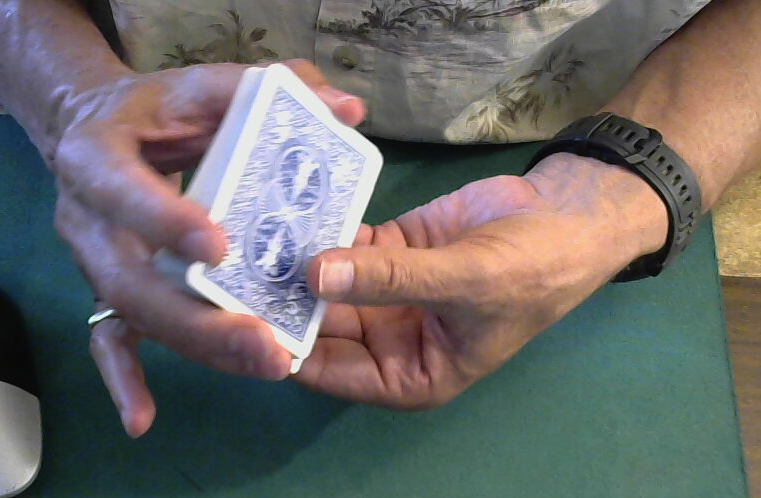
Raise all of the cards (including the bottom side jogged ace) and start the shuffle by running one card, the top ace. Follow by running four more, but if you can, take them in pairs rather than running single cards. If you can’t, then just run four more cards.
Next is the only “milk” action. But note that with the side jogged ace, if you press down with the right hand cards, pushing the side card against the cards already dealt, that side-jogged ace will snap down on top of the cards already dealt.
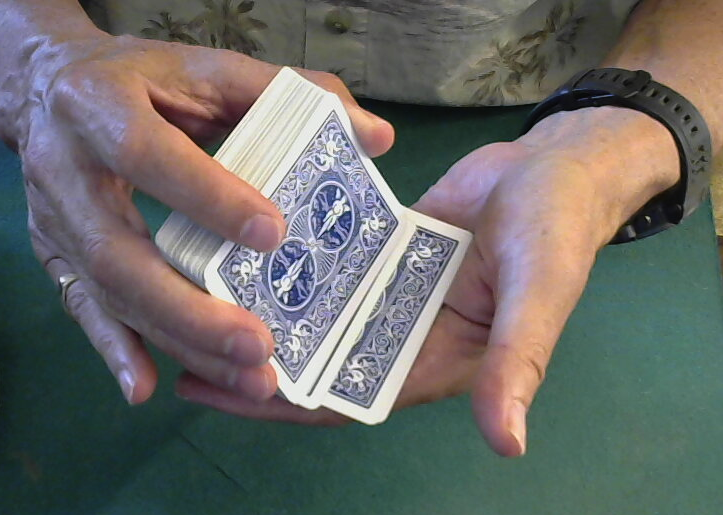
Now run four more cards. Injog the next card and shuffle off, keeping the last few cards of the right hand portion until last, then run those cards singly. The last two cards run will be two aces.
Now it gets a little tricky. As you start the second shuffle, the right thumb is going to lift up under the injogged card and take a break.
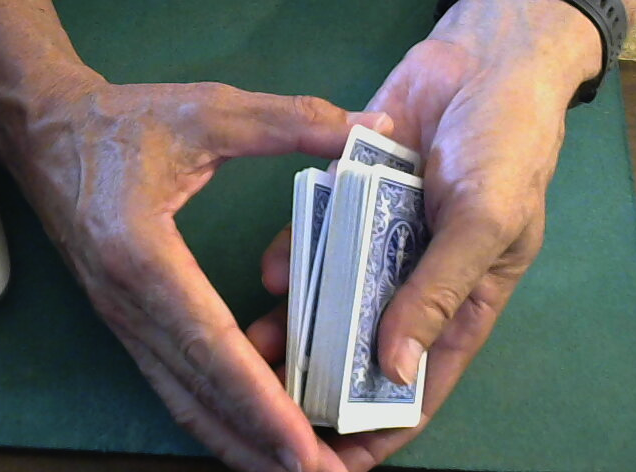
Grasp all of the cards above the break in the right hand and run one card on top of the left hand cards. After you run that one card, you right hand will come down to continue the shuffle but will pick up the lower block of cards.
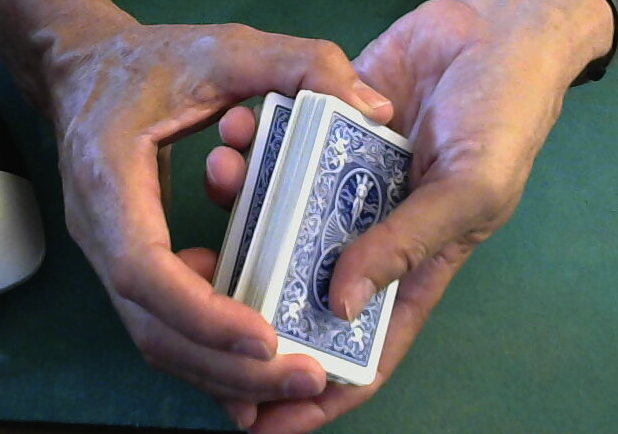
Lift all of the cards and run five singles into the left hand. Then you will drop the lower block on top of those cards and you come back for the next run. Your left fingers aid in this by grasping the lower block.
You now will run seven cards, but by breaking the rhythm. Run three, pause, then run four more. Then injog the next card and shuffle off.
Now undercut the deck at the injog and for the final short shuffle simply run off three cards and throw the rest on top. The stack is now complete and on top.
Below is a video of a practice session: